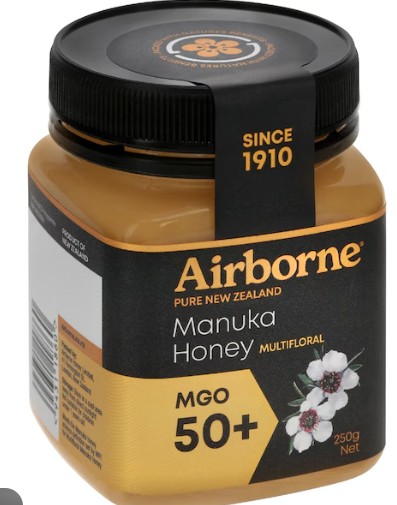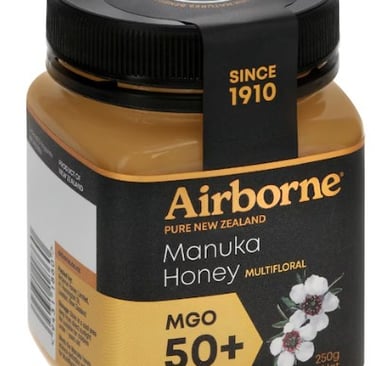
Manuka Honey Benefits: What Makes This Honey Different From the Rest?
Manuka honey is often described as more than just honey. Learn what makes Manuka honey unique, how it’s different from regular honey, and what published research actually says about its potential benefits.
HEALTH
Staff Writer
8/7/20252 min read
What Is Manuka Honey?
Manuka honey is a type of raw honey produced by bees that pollinate the Manuka bush (Leptospermum scoparium), which grows primarily in New Zealand. While all honey contains naturally occurring antibacterial properties, Manuka honey is distinct because of a specific compound that has been widely studied.
This compound, methylglyoxal (MGO), forms naturally in Manuka honey and is responsible for much of its antibacterial activity. The presence and concentration of MGO is one of the key reasons Manuka honey has gained global attention.
Why Manuka Honey Is Different From Regular Honey
Most traditional honey relies on hydrogen peroxide for its antibacterial effects, which can break down when exposed to light or heat. Manuka honey, on the other hand, contains non-peroxide antibacterial activity, meaning its properties remain stable over time.
Because of this, Manuka honey has been researched more extensively than many other types of honey, particularly in laboratory and topical applications.
Understanding UMF and MGO Ratings
Authentic Manuka honey is often labeled with either a UMF™ (Unique Manuka Factor) rating or an MGO rating.
UMF™ measures multiple compounds that verify authenticity and strength
MGO indicates the level of methylglyoxal present
In general:
Lower ratings are used for everyday consumption
Higher ratings are often studied for topical or research purposes
These ratings help consumers identify genuine Manuka honey and avoid misleading products.
Potential Benefits of Manuka Honey (Research-Based Overview)
1. Antibacterial Properties
Published studies have shown that Manuka honey can inhibit the growth of certain bacteria in laboratory settings. This property has led to its use in research related to wound care and topical applications.
2. Digestive Support
Some research suggests Manuka honey may help support digestive health by limiting the growth of certain harmful gut bacteria and supporting a balanced microbiome when consumed as part of a normal diet.
3. Antioxidant Content
Manuka honey contains antioxidants and naturally occurring plant compounds that help combat oxidative stress, which plays a role in overall cellular health.
4. Skin and Topical Use
Medical-grade Manuka honey has been studied for wound management, while food-grade Manuka honey is often included in skincare routines for its moisturizing and cleansing properties.
5. Oral Health Support
Early research suggests Manuka honey may help reduce bacteria associated with plaque formation, which has led to its inclusion in some oral-care products.
Choosing Authentic Manuka Honey
When purchasing Manuka honey, look for:
UMF™ certification or a clearly labeled MGO rating
Country of origin listed as New Zealand
Independent testing information
Avoid products labeled “Manuka-style” or those without verification.
Is Manuka Honey a Cure or Treatment?
No.
Manuka honey is not a medication, and it should not be viewed as a cure or treatment for any disease. While research continues to explore its properties, it is best understood as a functional food with unique characteristics.
Final Thoughts
Manuka honey’s popularity comes from a combination of tradition, scientific interest, and verified authenticity standards. When sourced properly and used responsibly, it offers qualities that set it apart from standard honey — without replacing medical care or professional advice.
Disclaimer:
The information provided in this article is for educational and informational purposes only and is based on publicly available research. It is not intended as medical advice, diagnosis, or treatment. Always consult a qualified healthcare professional before making changes to your diet, health routine, or medical care. Products discussed are not intended to diagnose, treat, cure, or prevent any disease.
Sources
Molan, P. C. – The Antibacterial Activity of Honey
Unique Manuka Factor Honey Association (UMFHA) – Authentication standards
National Center for Biotechnology Information (NCBI) – Manuka honey research
Journal of Wound Care – Clinical research on honey-based wound management
Food Chemistry – Antioxidant properties of Manuka honey